
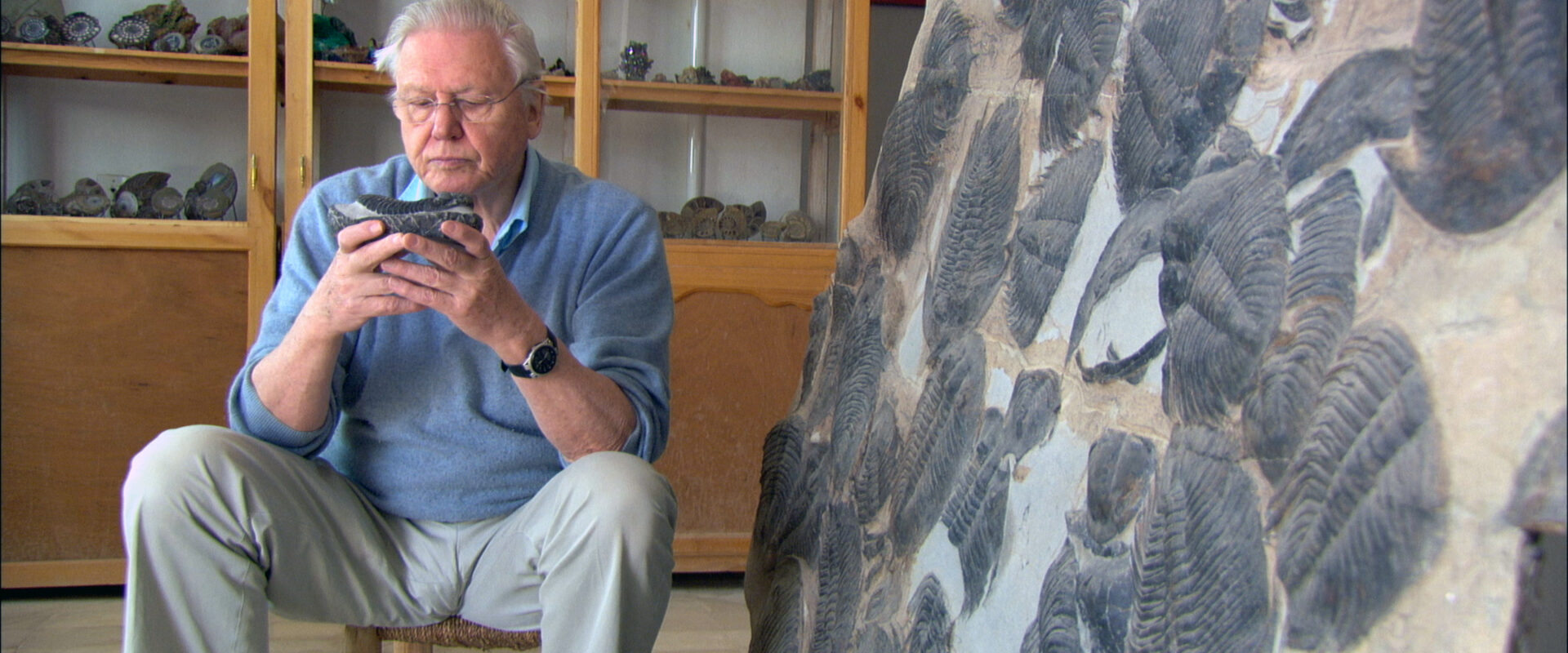
In the hushed silence of a rainforest canopy, where dappled sunlight filters through emerald leaves, a voice emerges that has become synonymous with wonder itself. For over seven decades, Sir David Attenborough has woven an remarkable legacy of natural storytelling that transcends mere documentation—transforming our understanding of the living world into something profound, personal, and utterly mesmerizing. His legacy isn’t just about the countless hours of footage or the prestigious accolades; it’s about an extraordinary ability to bridge the vast chasm between human consciousness and the wild hearts that beat in every corner of our planet.
The whispered secrets of nature have found their most eloquent translator in this remarkable man, whose insatiable curiosity has carried him from the steaming jungles of Borneo to the frozen wilderness of Antarctica. David Attenborough’s true legacy lies not merely in what he has shown us, but in how he has fundamentally changed the way we see ourselves as part of the natural world. Through his lens, we have witnessed the intimate dramas of creatures great and small, understanding that their struggles, triumphs, and adaptations mirror our own journey through existence.
The BBC Years: Crafting a Revolutionary Vision
When David Attenborough first stepped into the corridors of the BBC in 1952, television was still finding its voice, and natural history programming was little more than a curiosity relegated to occasional slots. Fresh from his natural sciences degree at Cambridge, the young Attenborough brought with him an infectious enthusiasm that would soon revolutionize how the world experienced wildlife. His early BBC work history began humbly as a producer, but even then, his vision extended far beyond the technical limitations of the era.
The transformation began with “Zoo Quest” in 1954, a program that broke revolutionary ground by filming animals in their natural habitats rather than in captivity. This wasn’t merely a change in location—it was a philosophical shift that placed wild creatures at the center of their own stories. Attenborough understood intuitively that the sterile environment of a zoo could never capture the essence of an animal’s true nature. The program’s success launched him into a career that would span decades, during which his BBC work history would become inextricably linked with the evolution of natural history filmmaking itself.
Throughout the 1960s and early 1970s, Attenborough took on the monumental task of Controller of BBC Two, where his programming decisions shaped British television culture. He championed color broadcasting, introduced groundbreaking series like “Monty Python’s Flying Circus,” and ensured that natural history remained a cornerstone of public broadcasting. Yet despite his executive success, the call of the wild proved irresistible. In 1973, he made the bold decision to return to his first love—bringing viewers face-to-face with the extraordinary diversity of life on Earth.
The Life Series: A Natural History Revolution
The launch of “Life on Earth” in 1979 marked the beginning of what would become Attenborough’s most enduring contribution to our understanding of the natural world. This wasn’t simply another wildlife program; it was an ambitious attempt to tell the complete story of life itself. The series pioneered filming techniques that brought viewers closer to animals than ever before, revealing behaviors and adaptations that had remained hidden from human eyes for millennia.
Each subsequent installment in the Life series—from “The Living Planet” to “Planet Earth” and beyond—pushed the boundaries of what was technically possible while maintaining an unwavering focus on the emotional connections between species. Attenborough’s BBC work during this period established him not just as a presenter, but as a master storyteller who could find profound meaning in the flutter of a butterfly’s wing or the patient hunt of a polar bear.
Curiosity as a Driving Force: The Mind Behind the Magic
What sets David Attenborough apart from countless other nature presenters is an almost childlike curiosity that has never dimmed despite his nine decades on Earth. This insatiable hunger to understand and share the mechanisms of the natural world has driven him to ask questions that others might overlook. Where most see a bird building a nest, Attenborough perceives an intricate architectural puzzle solved through millions of years of evolutionary refinement. His curiosity transforms simple observations into profound revelations about adaptation, survival, and the interconnectedness of all living things.
This intellectual appetite has led him to embrace new technologies and filming techniques throughout his career, always in service of revealing nature’s hidden secrets. From the early days of cumbersome 16mm cameras to today’s ultra-high-definition equipment capable of capturing the beating of a hummingbird’s wings in slow motion, Attenborough’s curiosity has consistently pushed the boundaries of what’s possible in wildlife filmmaking.
His approach to storytelling reflects this deep curiosity—every creature, no matter how small or seemingly insignificant, becomes the protagonist of its own compelling narrative. A leaf-cutter ant carrying its burden becomes a symbol of cooperation and determination. A mother elephant guiding her calf across a drought-stricken landscape embodies the universal themes of protection and perseverance that resonate with audiences worldwide.
The Science of Wonder
Attenborough’s curiosity extends beyond surface-level observation to encompass the latest scientific discoveries about animal behavior, ecosystem dynamics, and evolutionary biology. His programs consistently incorporate cutting-edge research, presenting complex scientific concepts in ways that feel accessible and emotionally engaging. This synthesis of rigorous science with masterful storytelling has created a body of work that serves both as entertainment and education, inspiring countless viewers to develop their own deeper connections with the natural world.
His collaboration with researchers and conservationists around the globe has resulted in programs that don’t just document animal behavior—they reveal the intricate web of relationships that sustain entire ecosystems. Through Attenborough’s lens, we understand that the health of a coral reef depends not just on the corals themselves, but on the complex interactions between fish, algae, water temperature, and even human activity thousands of miles away.
Traveling the World: A Lifetime of Extraordinary Adventures
The scope of David Attenborough’s traveling experience reads like an explorer’s dream journal. Over seven decades, he has ventured into virtually every ecosystem on Earth, from the crushing depths of ocean trenches to the oxygen-thin peaks of mountain ranges. Each journey has added another layer to his extraordinary legacy, deepening his understanding of how life adapts to the most challenging environments our planet can offer.
His travels have taken him to witness some of the most spectacular and endangered wildlife phenomena on Earth. He has stood among the mountain gorillas of Rwanda, observing their complex social structures and gentle intelligence. In the Galápagos Islands, where Darwin first conceived his theory of evolution, Attenborough has documented the ongoing process of natural selection in real-time. His traveling experience encompasses the seasonal migrations of caribou across the Arctic tundra, the ancient rituals of birds-of-paradise in New Guinea’s remote forests, and the delicate dance of courtship among albatrosses on wind-swept islands.
Adventures That Changed Our Perspective
Each destination in Attenborough’s extensive travels has contributed to a growing understanding of Earth’s biological diversity and the threats it faces. His expeditions to remote locations have often been among the first to document species and behaviors previously unknown to science. The traveling experience he has accumulated over decades has provided him with a unique perspective on the changes occurring in natural habitats worldwide.
In the Arctic, he has witnessed firsthand the dramatic effects of climate change on polar bear populations and the rapidly shrinking ice sheets they depend upon. His visits to tropical rainforests have documented both the incredible biodiversity these ecosystems contain and the alarming rate at which they continue to disappear. These experiences have transformed Attenborough from merely an observer of nature into one of its most eloquent advocates.
The physical challenges of his traveling adventures would test explorers half his age. Well into his nineties, Attenborough continues to venture into remote locations, driven by an undiminished passion for discovery. His willingness to endure discomfort, danger, and exhaustion in pursuit of the perfect shot or the undocumented behavior speaks to a dedication that goes far beyond professional obligation.
The Human Connection: Bridging Two Worlds
Perhaps the most remarkable aspect of David Attenborough’s heritage is his ability to forge deep emotional connections between human audiences and the wild creatures that share our planet. Through his programs, millions of people have experienced intimate moments with animals they will never encounter in person—feeling the tension as a cheetah stalks its prey, the joy of penguin parents reuniting with their chick, or the ancient wisdom in an elephant’s eyes.
This gift for creating human-animal connections has transformed wildlife viewing from passive entertainment into active emotional engagement. Attenborough’s storytelling technique places viewers directly into the narrative, making them witnesses to the daily dramas of survival, adaptation, and triumph that play out across the natural world. His voice, instantly recognizable and infinitely reassuring, serves as a bridge between the human experience and the often harsh realities of life in the wild.
The programs he has created over his long BBC work history have inspired generations of conservationists, biologists, and ordinary people to care deeply about species and habitats they might otherwise never have known existed. This emotional investment has translated into real-world conservation efforts, with many protected areas and species recovery programs benefiting from the awareness and support generated by Attenborough’s work.
A Legacy of Conservation
The conservation impact of Attenborough’s career cannot be overstated. His traveling experience and intimate knowledge of ecosystems worldwide have positioned him as one of the most credible voices in discussions about environmental protection and climate change. Recent programs like “Our Planet” and “A Life on Our Planet” have explicitly addressed the urgent need for conservation action, using the same storytelling techniques that have made his wildlife programs so compelling to communicate the critical importance of protecting Earth’s remaining wild places.
His ability to show audiences the intricate beauty and complexity of natural systems makes the loss of biodiversity feel personal and immediate. When viewers watch a family of orangutans navigating a forest fragmented by palm oil plantations, or see coral reefs bleaching due to rising ocean temperatures, they’re not just observing environmental problems—they’re witnessing the disruption of relationships and communities they’ve come to care about deeply.
The Enduring Magic of Natural Storytelling
As we reflect on David Attenborough’s career, what emerges is a portrait of someone who has dedicated his life to revealing the profound connections that bind all living things together. His curiosity has driven him to the farthest corners of Earth, his traveling experience has provided him with unparalleled insight into the natural world, and his BBC work has created a body of programming that stands as humanity’s finest achievement in natural history filmmaking.
The true measure of Attenborough’s legacy lies not in the awards he has won or the miles he has traveled, but in the countless individuals whose relationship with the natural world has been forever changed by his work. Through his eyes, we have learned to see the extraordinary in the ordinary, to find wonder in the smallest creatures, and to understand our place within the grand tapestry of life on Earth.
His legacy continues to evolve with each new program, each fresh perspective on familiar species, and each urgent call for conservation action. At an age when most people have long since settled into comfortable retirement, David Attenborough remains driven by the same insatiable curiosity that first led him into the BBC’s corridors seven decades ago. His work reminds us that the natural world still holds infinite mysteries waiting to be discovered, understood, and shared with those who care enough to look closely and listen carefully to the stories it tells.