
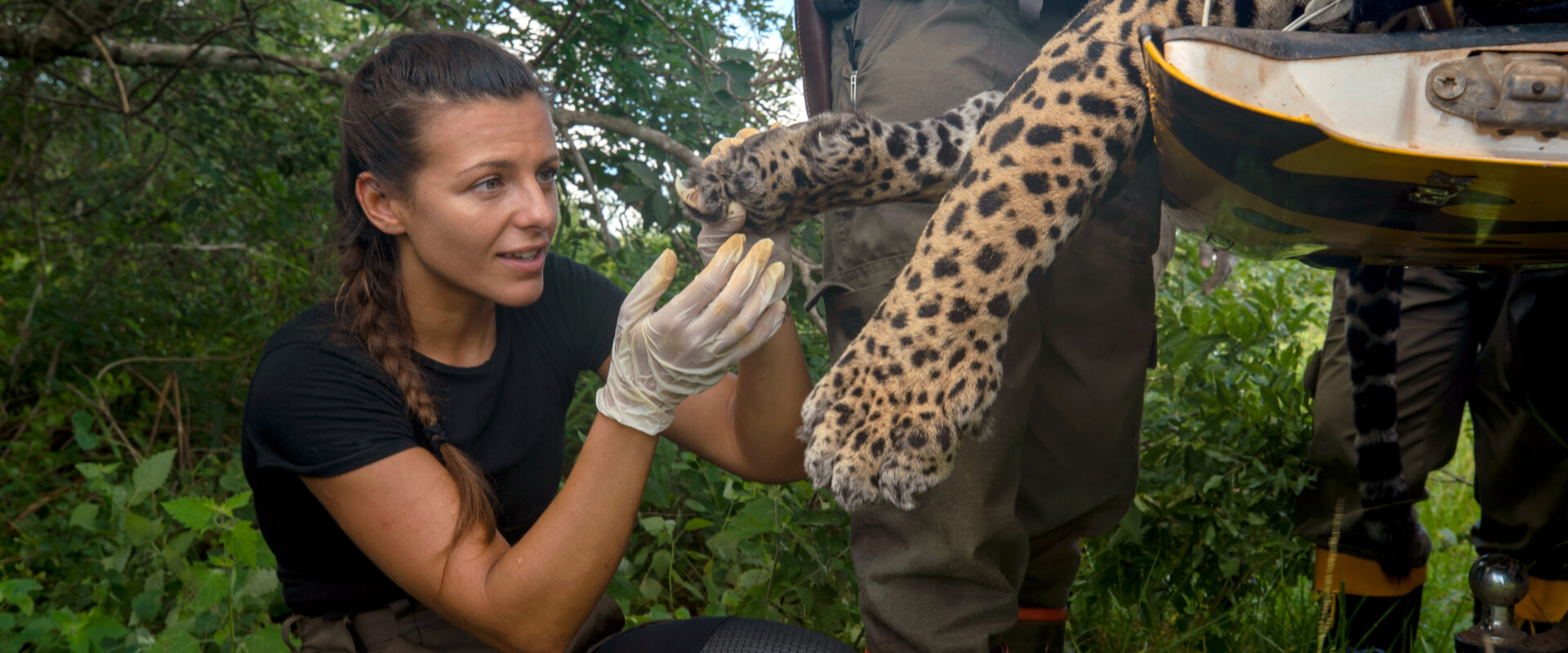
Deep in the heart of Brazil’s Pantanal, where waterways snake through endless grasslands and ancient trees cast shadows over hidden pathways, one of nature’s most magnificent predators moves like a ghost through its domain. The jaguar, South America’s apex predator, has remained largely mysterious to science despite centuries of fascination. Now, through the groundbreaking documentary series Jaguar Journals, viewers can witness an unprecedented decade-long scientific mission that’s revolutionizing our understanding of these elusive big cats. Biologist Lizzie Daly partners with the ambitious Oncafari research project, bringing audiences closer than ever before to the secret lives of jaguars and the intricate web of survival strategies that make them nature’s ultimate adaptation success story.
The Remarkable Hunting Adaptations of South America’s Apex Predator
Unlike their African and Asian big cat cousins, jaguars have evolved into nature’s most versatile hunters, capable of thriving in environments that would challenge any other large predator. What makes the Jaguar Journals series so compelling is how it reveals the sophisticated hunting techniques that set these cats apart from all other big cats on Earth.
The jaguar’s bite force of 1,500 pounds per square inch – nearly twice that of a lion – represents millions of years of evolutionary refinement. This crushing power allows them to pierce turtle shells and caiman skulls, accessing prey sources unavailable to other predators. Through intimate footage captured during the Oncafari project, viewers witness how jaguars use this incredible bite force not just for killing, but as a precision tool for accessing the most nutritious parts of their prey.
Their semi-retractable claws and muscular build make them exceptional swimmers, a trait that distinguishes them from most big cats. In the flooded plains of the Pantanal, jaguars become aquatic hunters, diving for fish and ambushing caimans from the water’s edge. This aquatic adaptation has allowed them to colonize habitats across South and Central America, from tropical rainforests to wetlands and even coastal mangroves.
How Jaguars Master the Art of Solitary Survival
The Jaguar Journals documentary series illuminates one of nature’s most fascinating behavioral adaptations: how these solitary hunters maintain complex territorial systems across vast wilderness areas. Unlike pack hunters that rely on cooperation, jaguars have perfected the art of independent survival through sophisticated communication networks and territorial management strategies.
Each jaguar maintains a territory that can span up to 100 square kilometers, marked through scent posts, scratch marks, and vocalizations that carry for miles through dense vegetation. The Oncafari research reveals how these territorial boundaries function like invisible highways, allowing jaguars to avoid conflict while maximizing hunting opportunities. Males and females intersect their territories strategically, ensuring genetic diversity while maintaining the spacing necessary for adequate prey resources.
The series captures rare footage of jaguar communication behaviors, including the deep sawing calls that travel through jungle canopies and the subtle scent-marking rituals that convey information about reproductive status, health, and territorial claims. These communication networks represent a sophisticated social system that operates without direct contact, allowing jaguars to coordinate their activities across landscapes that would take days to traverse.
Territory Defense and Resource Management
Through radio collaring and camera trap data, the Jaguar Journals project demonstrates how jaguars optimize their territories based on prey density, water availability, and seasonal changes. During dry seasons, territories contract around permanent water sources, while flood seasons see dramatic territorial expansions as new hunting grounds become available.
This territorial flexibility showcases the jaguar’s remarkable behavioral plasticity – their ability to adjust survival strategies based on environmental conditions. Young jaguars spend up to two years learning these territorial management skills from their mothers, developing the complex spatial memory and hunting knowledge necessary for independent survival.
Conservation Challenges Revealed Through Long-term Research
The decade-long scope of the Oncafari project featured in Jaguar Journals provides unprecedented insights into the conservation challenges facing jaguar populations across their range. By tracking individual animals over multiple years, researchers have uncovered how habitat fragmentation, human encroachment, and climate change create cumulative pressures that threaten jaguar survival in ways never before understood.
One of the most significant revelations involves jaguar reproduction rates and cub survival. Female jaguars typically give birth to 2-4 cubs every two to three years, but research shows that habitat quality dramatically affects cub survival rates. In fragmented habitats, cub mortality can exceed 70%, while in protected areas with intact ecosystems, survival rates climb above 60%.
The series documents how jaguars adapt to human-modified landscapes, sometimes with surprising success. Some individuals have learned to navigate cattle ranches and agricultural areas, timing their movements to avoid human activity while accessing prey species that thrive in edge habitats. However, this adaptation comes with increased risks from vehicle strikes, retaliatory killing, and exposure to diseases from domestic animals.
Three Ecosystems That Shape Jaguar Behavior
The Jaguar Journals series showcases how different ecosystems have shaped distinct jaguar populations with specialized behaviors and physical adaptations. The Pantanal wetlands, Amazon rainforest, and Cerrado savanna each present unique challenges that have resulted in remarkable behavioral variations within the species.
In the Pantanal, jaguars have become semi-aquatic specialists, with some individuals spending up to 40% of their hunting time in water. These jaguars have developed enhanced swimming abilities and specialized hunting techniques for capturing fish, caimans, and capybaras in aquatic environments. Their territories follow river systems and seasonal flood patterns, creating dynamic hunting grounds that change dramatically throughout the year.
Amazon rainforest jaguars represent the species’ ancestral lifestyle, relying on dense canopy cover and incredible stealth to hunt in low-light conditions. These jaguars have perfected arboreal hunting techniques, occasionally climbing trees to access monkey troops and bird nests. Their territories are smaller but more vertically complex, utilizing multiple forest layers for hunting and movement.
Cerrado Savanna Adaptations
The Cerrado ecosystem presents unique challenges that have produced jaguars with exceptional endurance and heat tolerance. These open grassland hunters must cover vast distances between water sources and shade, developing enhanced cardiovascular systems and behavioral strategies for avoiding heat stress during daylight hours.
What Makes Jaguar Reproduction Unique Among Big Cats
Through intimate behavioral observations captured in Jaguar Journals, viewers witness the complex mating rituals and parental care strategies that distinguish jaguars from other big cats. Unlike lions with their pride structures or tigers with extended territorial overlaps, jaguars have evolved a reproduction strategy perfectly suited to their solitary lifestyle and diverse habitat requirements.
Female jaguars reach sexual maturity between two and three years of age, but may not establish their own territories and begin breeding until age four or five. This extended juvenile period allows for intensive learning of hunting techniques, territorial navigation, and the complex behavioral skills necessary for successful reproduction. The Oncafari research reveals how mother-cub relationships extend far beyond basic care, involving sophisticated teaching of ecosystem-specific survival strategies.
Mating occurs year-round but peaks during wet seasons when prey abundance is highest. The courtship process can last several days, with males and females engaging in elaborate scent-marking rituals and vocalizations that strengthen pair bonds and synchronize reproductive timing. After a 93-day gestation period, cubs are born in den sites carefully selected for protection from floods, predators, and human disturbance.
The Hidden Intelligence Behind Jaguar Problem-Solving
One of the most revelatory aspects of Jaguar Journals is its documentation of jaguar intelligence and problem-solving abilities. The series captures behaviors that demonstrate cognitive complexity rivaling that of primates, challenging traditional assumptions about big cat intelligence and revealing why jaguars have successfully adapted to such diverse environments.
Camera trap footage shows jaguars using tools and manipulating their environment in sophisticated ways. Some individuals have learned to use floating logs as platforms for fishing, while others demonstrate remarkable patience in ambush hunting, waiting motionless for hours in positions that maximize success probability based on prey behavior patterns.
The series documents cases of jaguars learning to open gates, navigating complex water systems during floods, and even coordinating hunting activities with other species like birds that help locate hidden prey. These behaviors suggest cognitive abilities that enable rapid adaptation to changing environmental conditions and novel challenges.
Learning and Cultural Transmission
Most remarkably, the Jaguar Journals research reveals evidence of cultural transmission – learned behaviors passed from mothers to cubs that become established within local populations. Different jaguar populations have developed distinct hunting traditions, territorial marking patterns, and even prey preferences that persist across generations through social learning.
How Climate Change Affects Jaguar Territory and Behavior
The long-term data collected for Jaguar Journals provides crucial insights into how climate change is affecting jaguar populations across South and Central America. Rising temperatures, altered precipitation patterns, and increased frequency of extreme weather events are forcing jaguars to modify behaviors that have remained stable for millennia.
In the Pantanal, changing flood cycles are disrupting traditional breeding and hunting patterns. Jaguars that have evolved to time reproduction with seasonal floods now face unpredictable water levels that affect prey availability and den site selection. Some populations are showing behavioral plasticity by adjusting breeding timing, while others experience reduced reproductive success.
Drought conditions in traditionally wet ecosystems force jaguars to expand their territories and travel greater distances between water sources. This increased movement elevates energy expenditure and exposure to human-related threats while reducing time available for hunting and resting. The series documents how individual jaguars cope with these challenges through behavioral innovations and habitat modifications.
Conservation Success Stories from the Oncafari Project
Despite the challenges facing jaguar populations, Jaguar Journals showcases remarkable conservation successes achieved through the Oncafari project’s comprehensive approach to jaguar research and protection. The series demonstrates how scientific research, local community engagement, and habitat restoration can create positive outcomes for both jaguars and human communities.
The project’s radio collaring program has identified crucial habitat corridors that connect isolated jaguar populations, leading to the establishment of protected wildlife passages that reduce vehicle mortality and genetic isolation. These corridors have increased gene flow between populations and provided jaguars with access to seasonal resources across larger landscape areas.
Community-based conservation programs featured in the series show how local residents have become jaguar protectors through economic incentives tied to wildlife tourism and ranch management practices that accommodate jaguar presence. These programs demonstrate that human-jaguar coexistence is possible when conservation strategies address both wildlife needs and human livelihoods.
Where to Watch
Experience the remarkable world of jaguars through this groundbreaking documentary series that brings viewers closer than ever to South America’s most elusive predator. Jaguar Journals offers unprecedented insights into jaguar behavior, conservation challenges, and the dedicated scientists working to protect these magnificent cats.
English:
– Jaguar Journals – Monday, May 18 at 18:00 CET
– Jaguar Journals – Tuesday, May 19 at 12:00 CET
– Jaguar Journals – Tuesday, May 19 at 18:00 CET
Don’t miss this opportunity to witness the secret lives of jaguars through the lens of cutting-edge conservation science and stunning wildlife cinematography.
FAQ: Jaguar Journals and Big Cat Conservation
Q: What makes the Oncafari project featured in Jaguar Journals unique among wildlife research initiatives? A: The Oncafari project represents the longest continuous jaguar research study in South America, combining radio collaring, camera traps, genetic sampling, and behavioral observation over ten years to create the most comprehensive understanding of jaguar ecology ever achieved.
Q: How do jaguars differ from other big cats in their survival strategies? A: Jaguars are the only big cats that are excellent swimmers, have the strongest bite force relative to body size, and can thrive in both arboreal and aquatic environments, making them uniquely adaptable to diverse South American ecosystems.
Q: What conservation challenges do jaguars face according to the documentary series? A: Primary threats include habitat fragmentation from agricultural expansion, retaliatory killing by ranchers, vehicle strikes on roads crossing jaguar territories, and climate change disrupting traditional prey cycles and breeding patterns.
Q: How long do jaguar cubs stay with their mothers before becoming independent? A: Jaguar cubs remain with their mothers for 18-24 months, learning essential hunting techniques, territorial navigation, and survival skills specific to their local ecosystem before establishing their own territories.
Q: What role do jaguars play in their ecosystems beyond being apex predators? A: Jaguars function as keystone species, controlling prey populations that prevents overgrazing, maintaining seed dispersal patterns through their impact on herbivore behavior, and creating habitat modifications that benefit numerous other species.
Q: How successful are current jaguar conservation efforts shown in the series? A: The series demonstrates significant successes including population stabilization in protected areas, establishment of wildlife corridors connecting fragmented habitats, and community-based conservation programs that reduce human-jaguar conflict while providing economic benefits to local residents.