
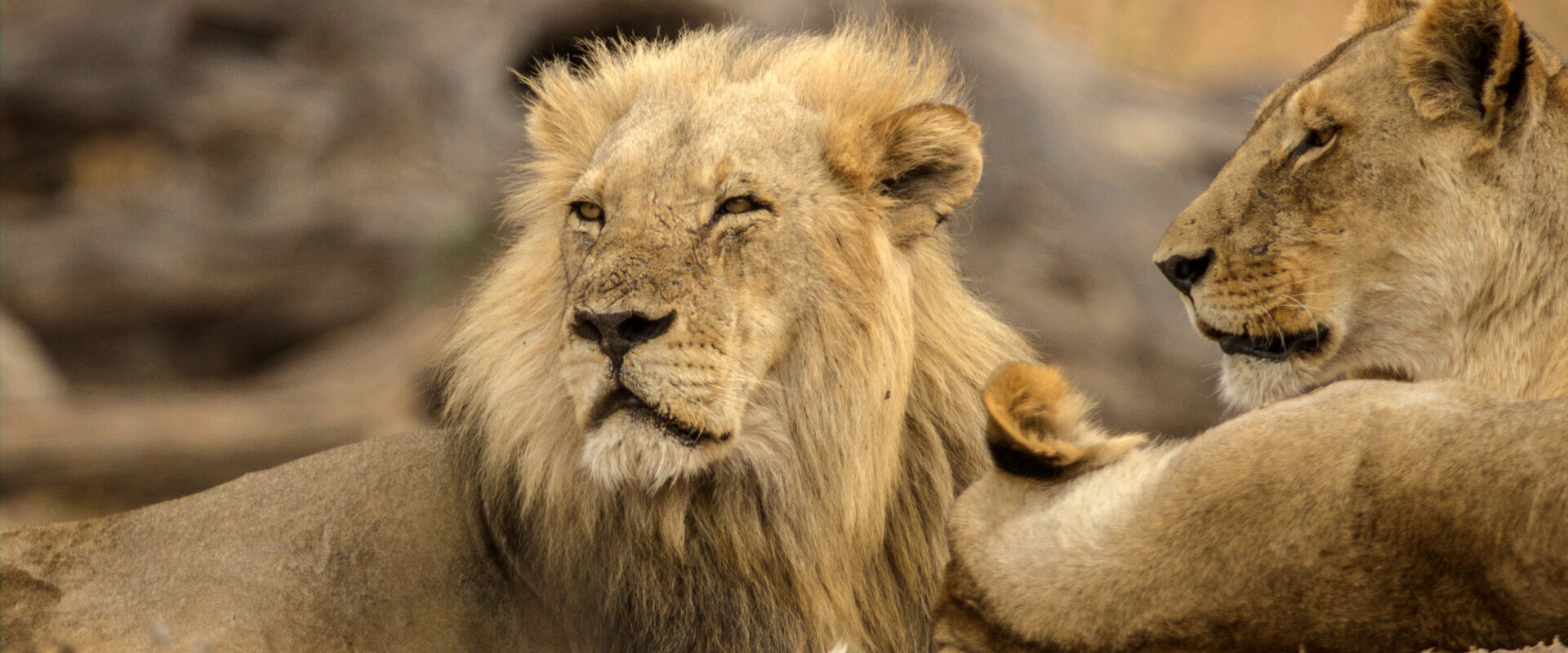
In the heart of Botswana’s Chobe National Park, where the river meets endless floodplains, one of Africa’s most compelling wildlife dramas unfolds daily. Pride Rules reveals the intricate social mechanisms that govern lion society, exposing a world where loyalty and betrayal intertwine like branches of an ancient baobab tree. This isn’t simply a story about apex predators hunting prey – it’s an exploration of how complex social structures evolve in nature’s most demanding environments. The series, narrated by Ivanno Jeremiah, peels back the romanticized layers of the “king of beasts” narrative to reveal something far more fascinating: a society built on shifting alliances, calculated risks, and survival strategies that have evolved over millennia. Here, on the banks of the Chobe River, we witness how nature creates its own rules of governance, punishment, and reward.
The Remarkable Social Architecture of Lion Prides
Unlike the solitary nature of most big cats, lions have evolved one of the most sophisticated social systems in the animal kingdom. Pride Rules demonstrates how this cooperative living arrangement isn’t just beneficial – it’s essential for survival in the challenging African landscape. The pride structure operates on multiple levels of hierarchy, with lionesses forming the backbone of the group through their hunting prowess and territorial knowledge passed down through generations.
The matriarchal foundation of lion society centers around related females who remain with their birth pride throughout their lives. These lionesses develop hunting strategies specifically tailored to their territory’s unique challenges, whether stalking buffalo in tall grass or coordinating attacks on elephant calves near water sources. Their collective memory spans decades, encompassing knowledge of seasonal prey movements, drought survival tactics, and the locations of hidden water sources that can mean the difference between life and death.
The Male Coalition Dynamic
Male lions face an entirely different set of survival challenges that shape their behavior in profound ways. Pride Rules reveals how young males must leave their birth pride upon reaching maturity, forcing them into a nomadic existence that tests every aspect of their survival skills. These bachelor coalitions, often comprising brothers or unrelated males who’ve formed strategic partnerships, spend years honing their combat abilities and territorial instincts.
The takeover process itself represents one of nature’s most brutal yet efficient systems of genetic selection. When males successfully challenge a pride’s dominant coalition, they systematically eliminate cubs sired by previous males, triggering the lionesses to come into estrus sooner. This seemingly harsh behavior serves a crucial evolutionary purpose, ensuring that the strongest genes are passed to the next generation while the new males can maximize their reproductive window during their typically brief reign.
How Chobe River Lions Master Floodplain Survival
The Chobe River ecosystem presents unique challenges that have shaped these lions into specialized floodplain predators. Pride Rules showcases how seasonal flooding transforms the landscape from dusty savanna to lush wetland, forcing the pride to adapt their hunting strategies, territorial boundaries, and social behaviors accordingly. During flood season, prey animals concentrate on elevated islands of land, creating both opportunities and intense competition.
These lions have developed remarkable swimming abilities, often crossing channels to reach stranded prey or establish temporary territories on islands. Their hunting techniques incorporate water as both obstacle and advantage – lionesses learn to drive buffalo into muddy channels where the prey’s mobility becomes severely compromised. The pride’s success depends on precise timing, as they must coordinate attacks while accounting for unpredictable water levels and shifting terrain.
The floodplain environment also influences pride size and composition. Larger groups can more effectively control scattered territories during flood season, but they also require more substantial prey to sustain all members. This creates a delicate balance where the pride must maintain enough members to defend prime hunting grounds while avoiding overcrowding that could lead to starvation during lean periods.
5 Survival Strategies Revealed in Lion Society
Pride Rules exposes five critical survival mechanisms that enable these magnificent predators to thrive in one of Africa’s most challenging environments. First, the division of labor between sexes maximizes efficiency – lionesses focus on hunting while males defend territory, allowing each group to specialize in their most crucial survival skills.
Second, the pride employs sophisticated communication systems involving vocalizations, scent marking, and body language that coordinate activities across vast territories. Roars can be heard up to five miles away, serving as both territorial warnings and location beacons for scattered pride members.
Third, cooperative cub-rearing ensures higher survival rates through shared protection and nursing duties. Multiple lionesses often synchronize their reproductive cycles, creating communal nurseries where any female may nurse cubs regardless of parentage.
Strategic Territory Management
Fourth, the pride demonstrates remarkable territorial flexibility, expanding and contracting their range based on seasonal prey availability and neighboring pride pressure. During dry season, they may abandon outlying areas to concentrate around permanent water sources, then reclaim these territories when conditions improve.
Fifth, conflict resolution within the pride follows established protocols that minimize energy expenditure and injury risk. Dominance displays, ritualized aggression, and submission behaviors allow pride members to settle disputes without potentially fatal confrontations that could weaken the entire group.
The Dark Side of Lion Politics Exposed
Beneath the majestic exterior captured in Pride Rules lies a world of calculated manipulation and strategic violence that rivals any political thriller. Lionesses engage in complex alliance-building, sometimes supporting coup attempts against established male coalitions when it serves their interests. These decisions aren’t made impulsively – they represent careful calculations based on the males’ hunting contributions, protection abilities, and genetic quality.
Infanticide extends beyond incoming males to include situations where lionesses eliminate cubs during extreme resource scarcity. This harsh reality demonstrates how survival pressure can override maternal instincts when the pride’s overall survival is threatened. Similarly, elderly or injured pride members may be abandoned during territorial disputes or long migrations, as the group’s survival takes precedence over individual welfare.
The series reveals how deception plays a crucial role in lion society through false alarm calls, misdirection during hunts, and strategic positioning that allows certain individuals to claim the best portions of kills. These behaviors highlight the cognitive complexity required to navigate pride dynamics successfully.
What Makes Chobe’s Ecosystem Perfect for Lions
The Chobe River region creates ideal conditions for lion populations through its unique combination of permanent water sources, diverse prey species, and seasonal habitat variation. Pride Rules illustrates how this ecosystem supports higher lion densities than many other African regions due to its reliable water supply that attracts massive herds of buffalo, elephant, and antelope throughout the year.
The floodplain’s seasonal transformation creates a natural rhythm that lions have learned to exploit. During dry season, concentrated prey around water sources makes hunting more predictable, allowing prides to build strength and raise cubs. Flood season disperses prey but also creates opportunities for ambitious prides to expand their territories or split into smaller groups that can exploit temporary resource abundance.
This dynamic environment has produced lions with exceptional adaptability and problem-solving abilities. They’ve learned to hunt in water, navigate complex channel systems, and coordinate attacks across multiple terrain types within a single hunting expedition. These skills represent evolutionary adaptations that may become increasingly important as climate change alters traditional African ecosystems.
Conservation Lessons from Pride Dynamics
Pride Rules offers profound insights into conservation strategy by demonstrating how social structure affects population resilience. Stable pride dynamics contribute to higher cub survival rates, more effective territory defense, and better adaptation to environmental challenges. Conservation efforts that protect entire pride territories rather than individual animals show greater success in maintaining viable lion populations.
The series highlights how human encroachment disrupts these complex social systems in ways that aren’t immediately apparent. When territories are fragmented by development, prides lose access to seasonal hunting grounds, forcing them into smaller areas where competition intensifies and social stress increases. This pressure can trigger behavioral changes that reduce reproductive success and increase human-wildlife conflict.
Understanding pride dynamics also reveals why translocation efforts often fail – relocated lions lack the territorial knowledge, social bonds, and environmental adaptations that their original pride developed over generations. Successful conservation requires protecting not just the animals themselves, but the intricate web of relationships and learned behaviors that enable their survival.
The Future of Lion Societies
Climate change presents new challenges that will test the adaptability of pride social systems. Pride Rules documents behaviors that may become crucial as traditional habitats shift – the swimming abilities of Chobe lions, their flexible territorial strategies, and their sophisticated communication systems could determine which populations survive in a rapidly changing world.
The series emphasizes how maintaining genetic diversity within prides becomes increasingly important as populations become isolated. Conservation programs must account for the complex male coalition dynamics that facilitate gene flow between prides, ensuring that artificial barriers don’t inadvertently increase inbreeding risks.
Where to Watch
Experience the compelling drama of lion society dynamics through Pride Rules on Viasat Nature. This extraordinary series brings viewers into intimate contact with one of nature’s most sophisticated social systems, revealing the complex strategies that enable these apex predators to thrive in challenging environments. Ivanno Jeremiah’s expert narration guides audiences through the intricate world of pride politics, survival strategies, and the eternal struggle for dominance on Africa’s most dramatic stage.
English:
– Pride Rules – Tuesday, May 5 at 18:50 CET
– Pride Rules – Wednesday, May 6 at 12:45 CET
– Pride Rules – Wednesday, May 6 at 18:50 CET
FAQ: Pride Rules and Lion Society
Q: How do lionesses choose which males to accept into their pride? A: Lionesses evaluate potential males based on their fighting ability, hunting contributions, genetic health, and capacity to protect cubs. They often test males through staged confrontations before fully accepting them into the pride structure.
Q: Why do lion prides have different sizes in different environments? A: Pride size reflects the carrying capacity of their territory and prey availability. Chobe’s abundant resources support larger prides, while desert regions typically sustain smaller groups. Environmental challenges directly influence optimal group dynamics.
Q: What happens to cubs during pride takeovers? A: New males typically kill cubs under two years old to bring lionesses into estrus sooner. However, lionesses may hide cubs, form protective coalitions, or temporarily leave the pride to protect their offspring from incoming males.
Q: How far can lion roars travel and why is this important? A: Lion roars can be heard up to five miles away, serving as territorial markers, location beacons, and coordination signals. This long-distance communication enables pride members to maintain contact across vast territories and avoid dangerous encounters.
Q: Do lions really cooperate during hunts or is it opportunistic? A: Pride Rules reveals sophisticated cooperative hunting strategies involving planned positioning, role assignments, and coordinated timing. While some cooperation may appear opportunistic, successful prides demonstrate clear evidence of strategic planning and specialized hunting roles.
Q: What makes Chobe River lions different from other African lions? A: Chobe lions have developed unique adaptations including swimming abilities, specialized floodplain hunting techniques, and flexible territorial strategies. Their social structures have evolved to handle seasonal habitat transformation and diverse prey species found in wetland environments.